
En el estilo APA, las figuras incluyen cualquier material añadido como complemento visual a un trabajo. Por lo general, se trata de elementos como tablas, gráficos, mapas, ilustraciones o fotografías.
(Nota: Las tablas se consideran un elemento distinto de las figuras y se rigen por sus propias normas, aunque estas sean muy similares. En la página web de la APA se puede encontrar una descripción detallada sobre el formato de las tablas.)
Hay algunos aspectos que debe tener en cuenta antes de incluir una cifra en su ensayo:
- ¿Es necesaria esta ilustración? Las ilustraciones deben transmitir información que, de otro modo, resultaría difícil de explicar a los lectores. No deben ser meramente decorativas.
- ¿Es esta imagen clara a simple vista? Su imagen debe ser clara en el sentido de que sea fácil de leer: debe tener el tamaño adecuado, ser nítida y no estar encogida ni deformada.
- ¿Está correctamente etiquetada esta figura? Además, su figura debe transmitir con claridad los datos que presenta. Deben indicarse las unidades de medida, los ejes deben estar etiquetados y deben explicarse todos los datos que contiene.
La APA describe los criterios que deben cumplir las buenas figuras como «simplicidad, claridad, continuidad y valor informativo». Intente asegurarse de ustedestos cuatro criterios cuando utilice una figura.
Colocación de las figuras
Hay dos opciones para colocar las figuras.
- Todas las figuras pueden reunirse en un anexo al final del ensayo, a continuación de la lista de referencias.
- Las cifras pueden incluirse en el cuerpo del ensayo, tras el párrafo en el que se mencionan por primera vez o se «señalan».
(La APA utiliza el término «callout» para referirse a una referencia a una figura, con el fin de evitar confusiones con las referencias que se incluyen al final de un artículo. Nosotros también utilizaremos el término «callout», si usted parece bien, compañero.)
Ya que hablamos de referencias a figuras, cuando utilice figuras en el cuerpo de su ensayo, evite frases como: «Como se muestra en la tabla siguiente». En su lugar, utilice el número de la figura: «Como se muestra en la figura 1».
Una figura puede ocupar toda una página si es necesario. De lo contrario, coloque la figura en la parte superior o inferior de la página, dependiendo del desarrollo de su ensayo. Una figura nunca debe quedar intercalada entre dos secciones de texto.
Elementos de una figura
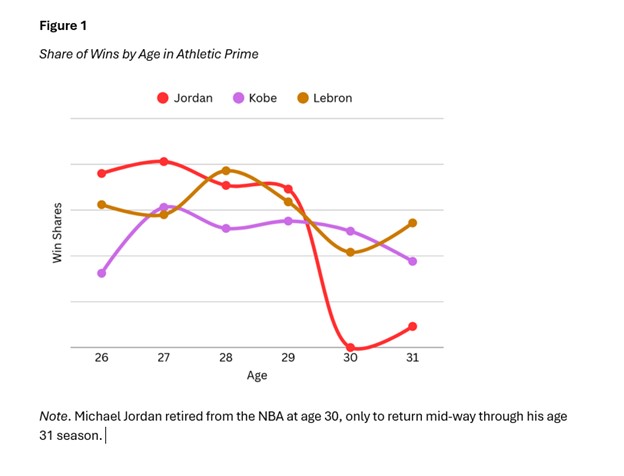 Una figura consta de cinco elementos, aunque usted no sea necesario utilizarlos todos cada vez usted una figura en un ensayo. Todos ellos se pueden ver en la imagen de la derecha.
Figura n.º. Esto aparece encima de la figura.
Título. El título de la figura debe aparecer en una línea con doble interlineado debajo de su número. Los títulos de las figuras deben escribirse en cursiva y con mayúscula inicial.
Imagen. Se trata de la propia ilustración: su gráfico, cuadro, fotografía, etc.
Leyenda. La leyenda (o clave) debe aparecer dentro de los límites de la figura. Solo es necesario incluir una leyenda si los datos no están etiquetados de otro modo.
Nota. Las notas deben aparecer en una línea con doble interlineado debajo de la figura. Las notas son opcionales. Pueden incluir definiciones de términos, información sobre derechos de autor, explicaciones de patrones de datos inusuales (como se ve en nuestro ejemplo) u otra información que no se refleje en la figura ni en ninguna otra parte del trabajo.
También hemos incluido un ejemplo de figura en nuestra plantilla de ensayo APA, que puede consultarse aquí.