
Has your writing ever been described as a “wall of text”? Unless you’re from Ancient Greece, that wasn’t intended as a compliment. Breaking your writing into paragraphs is the answer to this complaint.
We might not want a wall of text, but paragraphs will still be the building blocks of your writing. Each paragraph should be distinct and each one should stick to one main idea. Although, sometimes, you might find that an idea is too big for one paragraph. In those situations, try to find logical places to start new paragraphs—perhaps when introducing a new point or development.
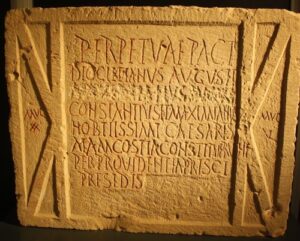 Paragraphs don’t just organize your writing; they also make it easier to read. They help to offer ideas in “chunks” that the eye and brain can more easily comprehend.
In academic writing, the first line of a new paragraph is indented. Other forms of writing might have different standards, but paragraphs are always denoted by some combination of indents and line breaks. Here on the OWL, we don’t indent our paragraphs. The New York Times doesn’t indent their online articles, either, whereas they do for the print edition. Why? Because the indents make the writing easier to read given the tight spacing of a newspaper.
For a college-level essay, your paragraphs will fall into three main categories:
- Intro paragraph: This paragraph states your main idea and thesis statement.
- Body paragraphs: These paragraphs each offer concrete examples, research, statistics, or historical fact that supports the claim made in your thesis.
- Concluding paragraph: This paragraph sums up what you stated in your into, in different words, and ties things up for your reader.
Paragraphs are necessary in academic writing to show changes in ideas or further development of ideas. In academic writing, paragraphs present specific information and analysis that should build up your thesis statement. Or, as we’ll discuss in our Essay Writing module, your paragraphs offer up the evidence that what you claim in your thesis statement is true.